

This article was originally published by PEI.
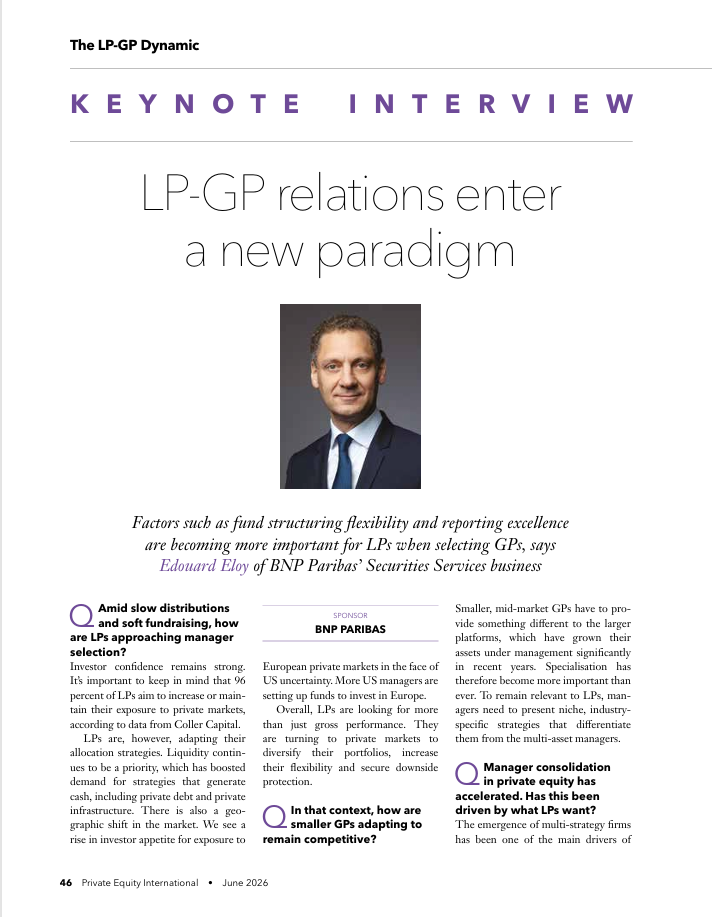
Edouard Eloy, Head of Private Capital Solutions, UK and Middle East, explains how factors such as fund structuring and reporting excellence are affecting LPs’ decisions when selecting GPs.
How have slow distributions and soft fundraising altered the process of LPs selecting GPs, and how important is a GP’s operating model?
To what extent has market consolidation in private equity been driven by LPs, and what are LP’s current reporting expectations?
How will the LP-GP relationship evolve, and what role will the rise in evergreen funds play in this?
- Liquidity prioritised but adapted strategies – LPs continue to prioritise liquidity, boosting demand for strategies that generate cash, such as private debt. There is also rising appetite for exposure to European markets, and we also see LPs turning to private markets to diversify, increase flexibility and secure downside protection. This shift rewards specialisation, and industry-specific strategies will help smaller-mid markets GPs differentiate themselves.
- Development of LP-tailored vehicles – GPs are developing customised, multi‑jurisdictional and multi-structure vehicles to meet specific LP requirements. This is a positive step for LPs who gain more control from these structures; however, this creates challenges for GPs. With increased tracking and accounting complexity challenges, it is integral to have an integrated technology set-up and strong support from servicing partners.
- Consolidation to combine relationships – Consolidation has been the most efficient route to provide LPs with a single platform that provides exposure to a mix of investment strategies. There is an increasing number of mergers between high-performing managers, who see the benefits of combining their respective LP relationships to form a larger, deeper LP base. However, spin-offs may occur if teams see new market opportunities.
- The importance of detailed reporting- LPs now expect real‑time data, and transparent, frequent reporting has become a baseline requirement. Detailed look‑through analytics to assess potential concentration risks are a key demand, and LPs have started to include granular investment reporting into their management reports, which can be a key part of negotiations between LPs and GPs.
- Evolving structures bring more flexibility – Evergreen funds and continuation vehicles provide more flexibility, and LPs can use these to manage alternative asset portfolios more proactively. ‘Run-off’ and ‘rolling vintage’ evergreen fund models, designed specifically for institutional investors, enable LPs’ to fully deploy and recycle capital more easily, and reduce the operational burden of repeatedly committing capital. CVs offer similar optionality, meaning LPs can anticipate growth and retain exposure on assets.
These structures mark a shift away from the traditional model that GPs and LPs are familiar with. LPs can now have more consistent control and influence over their investments, and the LP-GP relationship needs constant and proactive focus from both sides. GPs will need to invest heavily in people, technology and infrastructure in order to meet these new demands.
This is an evolution which is only heading in one direction: stronger and deeper relationships between GPs and LPs, and their supporting ecosystem.